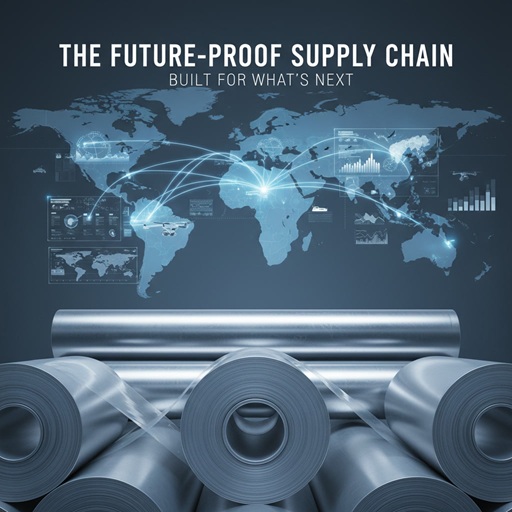
How to Build a Future-Proof Supply Chain: Resilience Strategies for the Flexible Packaging Industry
Published on December 10, 2025
The Future-Proof Supply Chain: Why Resilience Is No Longer Optional
After exploring the challenges and the evolving strategies within the flexible packaging market, one thing has become clear:
The companies that will thrive in the next decade are the ones preparing today.
Tariffs, trade instability, shifting material requirements, sustainability demands, and global logistics pressures are no longer temporary turbulence — they are becoming the new operating environment.
To succeed, converters need a supply chain that is not only reliable now, but adaptable to whatever comes next.
- The Market Has Shifted — Permanently
For years, low-cost sourcing from a single region was a competitive advantage. Today, it’s a vulnerability.
Why?
Because the variables have multiplied:
- Tariff revisions
- Country-specific duties
- Changing HTS classifications
- Freight disruptions
- Demand for recyclable and mono-material films
- Nearshoring and reshoring acceleration
A future-proof supply chain must be designed with built-in flexibility.
Future-focused converters are moving away from linear, single-source models and toward networks that can pivot quickly.
This means:
- Diversified sourcing across multiple geographies
- Backup supply lanes ready to activate instantly
- Inventory strategies that absorb shocks
- Materials that can substitute without hurting performance
- Partners who monitor policy shifts in real time
In other words, agility is now a competitive advantage.
For decades, Now Plastics has operated under a simple truth: global markets will always change — sometimes unexpectedly.
Our model supports long-term resilience through:
- A 60+ supplier global network that hedges tariff and regional risk
- Strategic warehousing that keeps materials available even when lead times spike
- Alternative materials, including high-barrier films for foil replacement
- Financial and commercial support to maintain healthy working capital
- Ongoing technical and regulatory intelligence to navigate future policy shifts
This ecosystem was built not for yesterday’s market — but for tomorrow’s challenges.
- Preparing for What Comes Next
The next disruptions may come from new tariffs, new sustainability rules, new technologies, or entirely new market expectations.
What matters is how prepared a company is to adapt.
A future-proof supply chain isn’t about predicting what will happen — it’s about being ready for anything.
👉 In our next post, we’ll wrap up this series by showing how all these elements come together — and why Now Plastics’ long-term strategy offers converters a true competitive edge in a turbulent global market.